

Sign up for our free monthly news and story alerts |
ADVENTURE Tioman guide for the intrepid: from shacks to chaletsSnorkelling, diving, swallows’ nests and the best “Ramly” burger this side of the Suez. But first you have to get there. A fun guide to Tioman resorts, spas, golf, and even one sleeping dragon.   SEE ALSO Kuala Lumpur hotels | Kuala Lumpur shopping | Langkawi guide | Malaysia spas | Penang guide | Singapore green hotels | El Nido fun guide | Zanskar treks 
Tioman's beaches display a calm not spied in Thailand or in Malaysia's sleepy west coast islands like Penang and Langkawi. The pace is unhurried, accommodation is simple and folks are friendly — that is Tioman's charm. JUMP TO Getting around Tioman | Treks, climbs and waterfalls | Flora, fauna and turtle eggs | Tioman dives and snorkelling | Food and spas | Tioman resorts | Hotel Contacts 
Tioman dives, coral, and shipwrecks are big attractions/ photo: Berjaya LEGEND has it that this pear-shaped gem of an island was once a dragon princess. While en route to her wedding in Singapore, she was bewitched by the gentle breezes and the golden sun, falling into a deep sleep and morphing, over time, into an island ringed by coral jewels. Of all the my-spouse-left-me-at-the-altar stories, this one probably takes the cake. Thus was Pulau Tioman born. This whimsical myth describes the dreamlike landscape of Pulau Tioman to a tee. Located 32km off the east coast of Peninsular Malaysia, the largest island in the region (at 133sq km), Tioman offers more than just nice beaches and coral reefs. One large waterfall sustains the flora, fauna and colourful eco-diversity, along with six major villages. The island’s hills teem with life. Small wonder then the Hollywood classic South Pacific was filmed here in 1958, bringing intrepid visitors flocking. Getting to Tioman and aroundTioman Airport in Tekek Village has flights from Singapore, Kuala Lumpur and Penang. After Berjaya Air, which flew in daily from Changi Airport Terminal 2 in Singapore ended the route in 2014, airlines like Scoot, Batik Air, Air Asia, and Malaysia Airlines picked up the baton. The flight is around one hour and fifteen minutes from Singapore's Changi Airport and costs around US$108. A one hour flight from Penang was about half that in summer 2025. 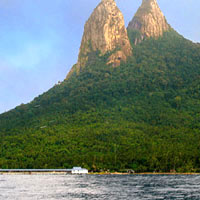
Mukut twin peaks/ photo: Jessie Kok If you don’t mind a longer journey from Singapore you can pay about S$80-S$90 (just over US$63) or even less for a roundtrip coach and ferry ticket, which runs via the Tanjung Gemok ferry terminal in Pahang. The journey takes approximately six-and-a-half hours including a ferry ride of around 45 minutes and the route may be closed during heavy monsoon periods. A smarter option is routing yourself via Mersing (www.tiomanferry.com) on the east coast of peninsular Malaysia, from where several ferry runs are available daily to Tioman at around one-and-a-half hours to two hours. Private taxis to Mersing are available. The ferries will make several stops along the west coast of Tioman — (south to north) Genting, Paya, Tekek and Salang. So pick your spot carefully. Send us your Feedback / Letter to the Editor As a reference, travel operators such as Viatour (www.viator.com/) may offer three-day two-night private packages that include ferry transport (with pick up from Singapore or Johor Bahru), meals, and chalet stays with coral and shipwreck dives, for around US$500 during the relatively drier peak season (May-September). A range of inexpensive tours are on offer by various operators following a similar pattern often with simpler accommodation. There may be additional charges for conservation to combat the destruction of the coral reefs, which were badly damaged by littering and unethical snorkelling practices when tourism first took off. They have worked. The white-sand beaches are cleaner, waters are clearer and biodiversity is alive and well. 
Tunamaya huts with the Mukut Twin Peaks as a backdrop/ photo: hotel Nevertheless, not all the coastal villages sport sand fine enough for polishing your silver with, so map out your holiday activities before setting off. Will you be bringing the 44-piece cutlery set, or the boogie board? Do you need white sand? Or azure sea? Or both? The lack of roads on Tioman means that getting around requires a boat and the simplest way to get from village to village is to charter a speedboat for around RM600 privately or RM120 (US$1=RM4.22) per head (with a minimum count applying). The boats are all individually run so it’s best to approach your hotel’s activity desk to arrange one. Locating a speedboat is no problem. The islanders pretty much know each other by first name and the network will miraculously provide just when you thought all was lost. Although the price may seem steep, there’s a little room for negotiation, depending on how many villages you’d like to visit. Do bear in mind that the locals are more concerned over fuel costs per trip around the island than making a quick buck, so ask hotel staff to help recruit more passengers if you don’t have a group. So on with our Tioman guide. Before starting out get oriented with our Tioman map. Treks, climbs and waterfalls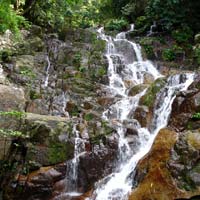
Mukut Falls/ photo: Jessie Kok Pulau Tioman may be better known for its scuba and snorkelling facilities, but its treks have a lot going for them. As with the beaches, decide what level of exploration you prefer before picking your village. Paya Village has its own mini waterfalls just 15 minutes behind Paya Beach Resort that supply the entire village through pipes. To get there, turn right at the bridge connecting the Paya Beach Resort with Tioman Paya Resort, and follow the signs up the hill. You’ll probably come across residents with fishing gear along the way. The walk isn’t tough, and the diversity of tropical plants, incessant insect calls and the pervasive smell of rich, moist earth should keep your mind off the incline. For a bit more of a workout try the east-west hiking route from Paya Village to Juara Village. The traverse takes approximately three hours and passes through Berjaya Tioman Resort as well as Tekek Village in the centre of the island. If you were hoping for something a bit more spectacular, head over to Mukut Village, at the base of the Asah Waterfall. There is only one route from the Mukut jetty to the waterfall, but the 20-minute ascent is muddy and fairly steep. Do have a good breakfast before attempting the climb, and bring a water bottle. No parasols needed here: the forest filters sunlight and the lush green surroundings double up as a natural air-conditioning system. At the top you’ll be rewarded with a dramatic eyeful of crashing water, and the chance for a swim. The water here is crisp, chilled and potable. It also serves as a good spot for daily ablutions. On my way down I saw some of the locals making their way up the hill, toothpaste-laden brushes at the ready. Those must be some precious teeth to demand a daily uphill hike. 
Tunamaya idyll: the jetty stretches into the blue/ photo: hotel The waterfall stems from the famous twin peaks, Bukit Batu Sirau and Bukit Simukut; so do stop by for picture opportunities on your way back to the jetty and village. There are no roads into the mountains, but a picturesque view awaits if you are travelling to Mukut by boat from the west. The granite peaks that loom high above the forest canopy are popularly known as Chula Naga (Dragon’s Horns, remember that princess?). Juara Village is the ideal spot for rock climbing fanatics. Stretching along a wide sandy beach that is not particularly welcoming of boats, the village is a degree or two cooler than the others due to its location, surrounded by forests and facing the South China Sea. It also boasts one of the larger populations in Tioman and has its own primary school. To reach the cliff you will need to wade across a fen at the end of the Juara Beach Resort. The fen is clean, just slightly clouded with sand, and a dirt track picks up on the other side. Follow it for about 700 metres. Some of the rough steps are cut rather high; so do be careful, especially after the rains. The cliff has up to 15 difficulty levels with metal hooks bored into the grey rock, but it doesn’t fall under the purview of the village. Beginners can sign up for a professional course with Santai Bistro Restaurant and Chalet, which also provides overnight accommodation for guests and beach goers in clean, air-conditioned wooden cabins with queen sized beds. See our Tioman map. Swallows and turtle eggs
Impiana Inn huts/ photo: hotel The local boatmen are your best shot at exploring swallow’s nest caves. These can only be accessed by sea. There are two species of swiftlets here: the grey-rumped swiftlet and the black-nest swiftlet, both of which labour at creating their “edible” nests, providing a livelihood for some residents. As the swiftlets like to say: “Hey, what happened to my house?” My boatman, Benkris, steered the speedboat into a private alcove named Gua Laya on our way from Juara Village to Salang Village, and pointed up to a shadowy overhang, where hundreds of swallows flitted about. Against the backdrop of blue skies, soaring above the water, the cliff is a jaw-dropping vision, a pleasure heightened by the fact that not many get to see it in this manner. Most tourist boats pass by sights that the locals take for granted, but a friendly tone and genuine show of interest will go far. The boatmen here do like to share their world. Turtle eggs are another huge source of interest. You can go to the Juara Turtle Project Centre (www.juaraturtleproject.com) in Juara Village on the east coast, which is open all year round and sees more visitors from mid-march to the end of October during the turtle hatching season. Turtle lovers can also volunteer in the project, which offers clean and comfortable accommodation on site with full breakfasts and lunch from RM80 per night. However, nothing beats a little detective work yourself – or at least by your guide. While we were on the white beaches of Tulai Island, Benkris broke a stick and prodded patches of sand, as if to test the depth, before crouching down and digging with his hands. It was a long process. But, just as I was beginning to question his knowledge of local lore, he hit the jackpot, retrieving in the palm of hand, a sandy egg the size of a golf ball. 
Juara Beach Resort: Family Seaview Chalet/ photo: hotel Sensing a turtle’s nest two metres underground on a long stretch of sandy beach takes a special kind of talent, and it is this understanding and love of wildlife that makes Tioman residents different from those in many other tourist-driven destinations. After showing me the egg, a grinning Benkris laid it carefully back in its nest and covered it up, carefully restoring the surface to its natural state. Tioman dives and PADIThe main pull of Pulau Tioman still comes from its sparkling blue waters, white sandy beaches and diverse marine life. If this is the primary lure for you, make Salang Village your launch pad. There are boat rides from here to reefs or to nearby islands (like Pulau Tulai and Monkey Bay) for around RM30 each way. Dive schools here such as the B&J Diving Centre (www.divetioman.com) offer PADI open water courses, as well as “nitrox” (enriched air) dives. Or opt for the diving courses available at the Tioman Dive Centre (www.tioman-dive-centre.com) if you are based in Tekek where the city centre is located. Courses starts from RM280 for a basic scuba diving course (three hours) to RM800 for the PADI scuba diver programme. Throw in the option of a PADI Junior Scuba Diver program for young adventurers, and you may just get an allround family expedition underwater. Budding and professional divers who are based in Juara can approach Raman, the owner and instructor of Sunrise Dive Centre (www.sunrisedivecentre.com), who was born here and has dived in Tioman all his life – enough to know the best spots in and around the island by heart. Fish often approach snorkellers in hope of a good feed, but beware of the many sea urchins. Some resorts offer trips on glass bottomed boats, which leaves you in no danger of getting either wet or impaled, and fishing trips outside the marine park are also available. For snorkellers, Paya Beach Resort offers speedboat trips to nearby Renggis island, teeming with marine life and with crystal waters so clear you can see five-metres down. Amazing nightlife – there’s none – and spas
Japamala hillside huts: azure views/ photo: hotel Malaysia is a foodie’s paradise and its islands are no exception. Salang Village is the place to go for the widest choice. Try a “Ramly” burger: beef patties, lettuce and cheese wrapped in a fried egg, slathered with sauce and sandwiched between two thick buns, all for RM10 or less. There's an excellent Ramly burger stand next to the Salang Dreams Restaurant. It's cheap, authentic and delicious. The Salang Dreams Restaurant (salang-dream-restaurant) does a very good Bandung noodle – noodles with chicken, vegetables and egg in peanut sauce – and the Pattaya fried rice comes wrapped in an omelette. For something a bit more tangy, go for a piping hot plate of “mamak” noodles, power-packed with chicken, seafood, vegetables and eggs fried in a tomato sauce. A few nearby cafes serve ice-blended coffees, shakes and teh-tarik (Malaysian pulled tea – poured from a height) and Paya Beach Resort has good dishes at competitive prices. Those feeling under the weather (or suffering from sunburn) are advised to try the preserved vegetable soup with noodles. Preserved vegetables are known for their cooling properties. Barbequed seafood is also available at the resort, though the beach is lined with small eateries. Those who fancy an evening of seafood paired with wine would enjoy Mandi-Mandi restaurant at Japamala Resort for seafood and cocktails. Or try their Tamarind Tioman for Malaysian fare. Owned by Samadhi Retreats, the honeymoon resort is a perfect spot for romantic dining, with lanterns lighting the way for couples taking an evening stroll on the jetty to the restaurant, which overlooks the South China Sea. Tioman is not a place for night owls, but karaoke is available at a few resorts. At the Paya Beach Resort you can belt out tunes until 1am in a basement function area stocked with beer. Many of the hotels have a pool table or two in the bar, as well as Internet rooms for those compelled to stay in touch. 
The Boathouse Tioman opened in 2024, raising the rooming bar/ photo: hotel Shopping here is about as varied as the nightlife and beaches are blissfully free of unwanted hawkers. Souvenir shops in Tekek and Salang Village sell colourful trinkets and cheap glad rags, and there are a few duty-free shops in Tekek. Tioman spas and massage parlours are confined to hotels where an hour’s back rub will set you back around RM250. A look at resorts and eco-lodgesThough lodging and dining won’t break the bank, getting around is pricey, so try to pick a village that best suits your needs. All the beach resorts and hotels here offer individual huts, with the exception being the Berjaya, which also has rooms in a main hotel-style building. A 2024 arrival from HPL is The Boathouse Tioman, a 20 minute drive south from the Genting jetty on the island's west coast. Stylish two-storey wood chalet accommodation is on offer. Try a Beachfront Bungalow with mosquito-net-draped four poster bed upstairs with gleaming wood floors and a breezy sea-facing balcony. Expect 49sq m of stretch space with with king-size bed and space for two adults with one child, 49-inch flatscreen TV, ceiling fan and aircon, beach bag, hairdryer, rain shower, mini-bar and safe deposit box. There's a Nespresso machine too. Food options are excellent with the Attap Seed Restaurant serving chicken and beef satays along with Ikan Bakar Sambal and local favourites. Best of all there's room service for lazy in-bed dining. The Boathouse is a considerable step-up from the usual fare. Expect a games room, swimming pool and well equipped dive centre. In all there are 31 traditional houses in Malay style. 
Breezy Berjaya pool/ photo: hotel Clearly the standard of accommodation has picked up in recent years. Also explore better players like Japamala Resorts, Bagus Place and Tunamaya Beach & Spa Retreats that have raised the bar by catering to honeymooners and travellers who enjoy more upmarket accommodations during their stay. Such offerings border on rustic luxury – Bagus Place features huts built above smooth rocks and beneath century-old trees with quality fittings overlooking the sea; while the Japamala Resort getaway provides stylish wooden huts perched cliff-edge with all the modern features. Japamala is now under Samadhi Retreats. Opt for a Hillside Sarang with heated private plunge pool or a Seaview Sarang. Think small balconies, kitchenette, rain shower, twin vanities, walk-in wardrobe and flatscreen TV. Those who prefer to be close to the Mukut waterfalls will find themselves at home in Tunamaya Beach and Spa Resort, which boasts classy beachfront villas, king-sized beds and balconies that open up to face the sea and a large swimming pool. With the Twin Peaks rising high above in the background, the area makes a very pretty picture for anniversary stays and getaways. The Pawana Restaurant offers local Malaysian cuisine as well as Western. 
Berjaya Deluxe Beach Front Chalet/ photo: hotel For more hotel-like facilities, Berjaya Tioman Resort is a self-contained 268-room village in its own right. It sits halfway between Paya and Tekek Village on the west coast, with rooms that are clean, modern, and well designed. The facilities include an 18-hole golf course and spa, making its sprawling grounds the largest among all the players on the island. The hotel also has conference and meeting facilities for 20 to 400 so there’s room for the high season stretch. An 80sq m Beach Front Suite offers a Living Room, LED TV, coffee machine, hairdryer, WiFi, airconditioning, soaking tub and microwave. Step out onto the sand and have a quick dip any time. Just along the coast from the resort is the former Tioman Island Resort, now no longer under Berjaya and renamed the Selesa Tioman for relaxed home stays. These seven blocks of studio and family suites are set on a rocky promontory and you will need to walk or take a shuttle bus down to the beach. Correspondent Justyn Olby adds, “They are best suited to families or larger self-catering groups since they are mini-apartments with living room, bedrooms and kitchen. In Paya Village the Paya Beach Resort offers the best services and facilities. It is spread across a vast stretch of sand and runs up and down the low-rise coast. Standard rooms are nothing to write home about but the superior and deluxe rooms are very attractive, with high roofs and beachfront views. Renovations and upgrades later have introduced nice Deluxe Beach Front Chalets. Expect rain showers, flat-screen televisions and private balconies. Some chalets are built over a pond, though the water is a little murky and there are mosquitoes. Try a Glamping Suite (with pool) or opt for a Beach Villa. The rooming choices by 2025 have certainly improved light years. The food exceeds expectations with seasonal changes to the menu during Christmas and Chinese Lunar New Year. The resort also runs an in-house activities counter that can rustle up trips and travel buddies in a flash. 
Paya Beach Chalets by the pond/ photo: hotel Juara Beach Resort in Juara Village enjoys unparalleled views of the South China Sea and instant access to wide sandy beaches, making it best for quiet getaways. The huts are big, squeaky clean and well maintained, and there seem to be fewer pesky insects compared to the other villages. They also have TVs. The resort manager is particular about cleanliness and asks guests to rinse their tootsies before entering the sand-free restaurant. Grass covers the grounds, rather than the usual tufts of plants and dry soil in other villages. However, the resort has experienced a slight surge in visitors in recent years with its collaboration with a tour operator and may have suffered some damage to its marine reefs. Yet, for a no-frills tranquil getaway, this family friendly resort is worth the trip out. For budget travellers, the Juara Mutiara Resort located further down offers a rate of RM100 per night with a fan and attached bathroom and provides pick-ups from Tekek Village. Its aircon rooms go for roughly RM150 with breakfast for a night with clean sheets and hot showers. Salang Village’s Salang Pusaka Resort has a friendly ambience and sits close to the popular Salang Dreams Restaurant. The village is popular with westerners and the nightlife here is more vibrant than elsewhere. Accommodation is clean but basic going from twin shares to 'quad sharing' and 'family sharing'. Ort opt for the Homestyle wooden cabin that retails for around RM1,000 a night with kitchen and washing machine for 10 persons. Salang Indah Resort has the cheapest packages available on the island and is a little closer to the water, though rooms are less well maintained than those at Salang Pusaka. Both sets of huts are a little dark and offer few frills. 
Salang Pusaka 'Homestyle' cabin for up to 10/ photo: hotel This area perhaps boasts modestly bustling nightlife compared to elsewhere on the island, with divers congregating by the beach of an evening with beer and seafood barbecues scrounged from cafes nearby.Other cheap and cheerful options include the Babura Seaview Resort Tekek that allows you to choose between regular air-conditioned chalets and others with fantastic sea views. Painted in exuberantly garish colours, this resort caters mainly to Chinese crowds and is located farthest away from the pier in Tekek by a 15 to 20-minute walk. However, service is genuine and friendly, the rooms are clean, and it also happens to be right next to the popular Tioman Diving Centre Also look at the Persona Island Resort, a small, quiet escape, close to the dive centre and also preferred by those on official visits due to its proximity to the local government offices. It is a small, often renovated U-shaped building consisting of 24 air-conditioned rooms with attached bathrooms. All the rooms are basic, tiled and very clean. In Genting there is a choice between Impiana Inn and Sun Beach Resort. Just off Kampung Genting’s Southern beach, Impiana Inn is a well-maintained chalet just metres from the beach where visitors are served by hospitable staff. Perfect for quiet, near private beach retreats, the no-frills chalets come with attached bathrooms and aircon. The alternative is Sun Beach Resort, which has furnished chalets facing the sand and is one of the bigger establishments around. Be it on the beach or on the hill, you will almost certainly get a sweeping view of the sea. That's our Tioman fun guide with resorts review to cabins, glamping, chalets and cheaper shares. Dive in. Don't forget your toothbrush for that hike up to the waterfall. Send us your Feedback / Letter to the Editor FAST FACTS / Hotel Contact List
Paya Beach Resort glamping suite style/ photo: hotel Climate: For most of the year expect warm weather with hot sun and cool winds along the coast (most of the rain falls inland). Before you book your trip bear in mind that several resorts tend to close from November until February, the monsoon season. The exchange rate is around US$1= RM4.22 (Malaysian Ringgit). The monsoon season is from November to February and several resorts may be closed during this period. Hospitals are not available in Pulau Tioman, but there is a doctor’s clinic in Tekek Village. The nearest hospital is in Mersing on the Malaysian Peninsula. Mersing is accessible by ferry. Bring and use plenty of mosquito-repellent, you’ll need it, and wear plenty of sunscreen. Topless sunbathing is against the law. Stepping on sea urchins is common and very painful. Don't try to conjure up a mental picture of this but the locals advise kneading and pounding the flesh to smash the spikes lodged in your body. This apparently hastens their disintegration and enables your body to heal faster. Tioman Ferry (www.tiomanferry.com) operates from Mersing port. Tioman Resort GuideBabura Seaview Resort Tekek. (Babura-Seaview-Resort-Pulau-Tioman).
NOTE: Telephone and fax numbers, e-mails, website addresses, rates and other details may change or get dated. Please check with your dealer/agent/service-provider or directly with the parties concerned. SmartTravel Asia accepts no responsibility for any inadvertent inaccuracies in this article. Links to websites are provided for the viewer's convenience. SmartTravel Asia accepts no responsibility for content on linked websites or any viruses or malicious programs that may reside therein. Linked website content is neither vetted nor endorsed by SmartTravelAsia. Please read our Terms & Conditions. |